
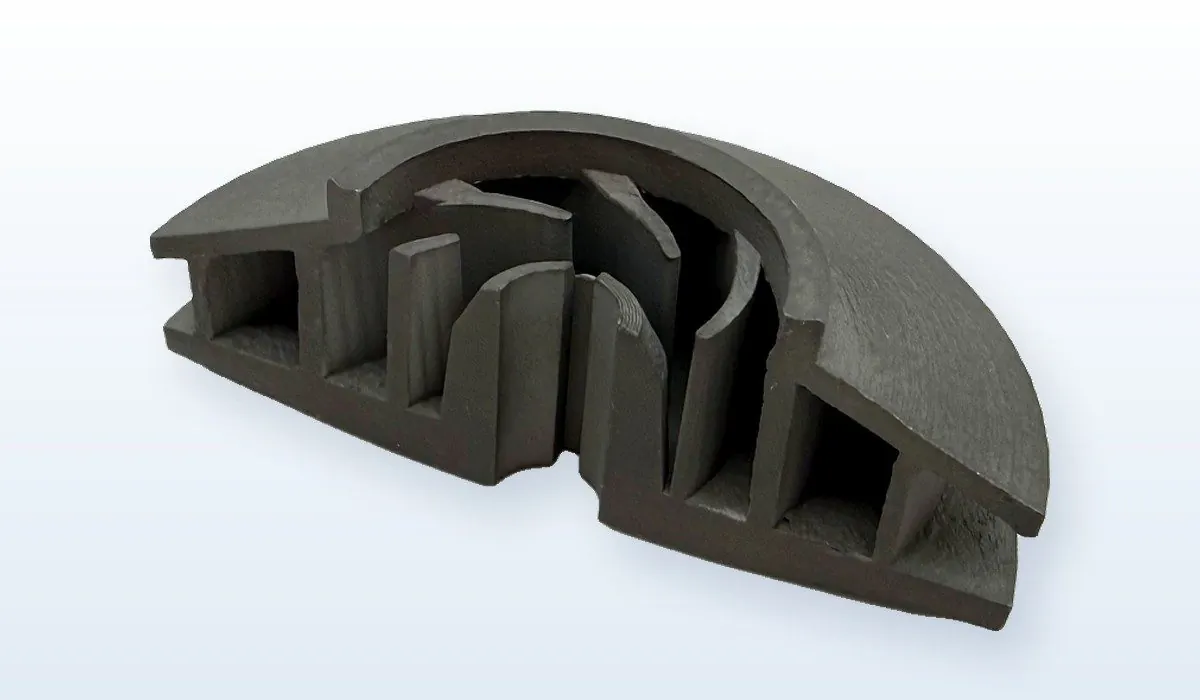
Why SLM (metal)?
High-strength
Full metal parts for high loads.
Lightweight design
Topology-optimised shapes with less material.
Internal channels
Cooling and media channels directly inside the part.
Consolidating parts
Assemblies become a single part.
SLM (metal) at ProtyLabs
Guide values. What is realistic for your part, we clarify in the quote.
| Feature | Value |
|---|---|
| Processes | Selective laser melting (SLM) |
| Tolerance | ±0.3 mm or ±0.4 % |
| Minimum wall thickness | 1.5 mm |
| Materials | Stainless steel 316L, aluminium AlSi10Mg, titanium TC4 (Ti6Al4V) |
| Post-processing | Support removal, machining of functional surfaces on request |
| Example | Aluminium bracket, 104 × 68 × 88 mm |
Materials for SLM (metal)
Stainless steel
Robust and corrosion-resistant for mechanical engineering and tooling.
Aluminium AlSi10Mg
Very light, good thermal conductivity – ideal for lightweight design and heat sinks.
Titanium
Very strong at low weight, for motorsport and special applications.
What we use it for
How to make your part better
When another process is a better fit
FDM
When form and fit are tested first – cheaper in plastic.
Milling
If the part is easy to mill, that is often more economical.
SLS
When plastic can carry the load.
How do you design for metal 3D printing?
In selective laser melting, metal powder is fully melted – parts are dense and high-strength. Unlike plastic powder processes, metal needs supports: overhangs from about 45° are supported, and these supports have to be removed afterwards. Good designs avoid flat overhangs and plan functional surfaces with a machining allowance that is milled afterwards.
Internal channels are a great strength – but they must be designed so that the powder can get out. Wall thickness should be at least 1.5 mm. For a first form check, a plastic prototype in FDM or SLS is often the cheaper intermediate step.
Key values
| Materials | stainless steel 316L, aluminium AlSi10Mg, titanium TC4 |
|---|---|
| Tolerance | ±0.3 mm or ±0.4 % |
| Wall thickness | from 1.5 mm |
| Overhangs | supports from approx. 45° |
| Post-processing | support removal, blasting, milling of functional surfaces |
FAQ about SLM (metal)
Is a printed metal part as strong as a milled one?
Depending on material and post-treatment, printed parts achieve comparable strength. We advise you on your specific application.
When is SLM (metal) worthwhile?
For complex shapes, lightweight design, internal channels or small quantities.
Can I test in plastic first?
Yes, a prototype in FDM or SLS is an affordable first step.
How long does it take to manufacture metal parts?
That depends on size and quantity. We state a binding delivery date in the quote.
Want to turn your idea into a finished part?
Send us CAD data, a photo, a sketch or the original part. We check feasibility, process and material and get back to you with an assessment and a quote.